In This Article
If you print, process, or handle checks, understanding MICR technology is essential. MICR — short for Magnetic Ink Character Recognition — is the secure printing technology used on the bottom of every check processed in the United States, Canada, and dozens of countries worldwide.
At Tinta Industries, we’ve supplied MICR toner, ribbons, and verification equipment to banks, check printers, and financial institutions across 7 countries, backed by over 20 years of founder experience. In this guide, we break down exactly what MICR is, how it works, and why it still matters in 2026.
How Does MICR Technology Work?
MICR technology uses iron oxide particles embedded in specially formulated toner or ink. When a check passes through a bank’s reader-sorter machine, a magnetic head magnetizes the characters printed on the MICR line, then reads the unique magnetic signal each character produces.
Here’s how the process works:
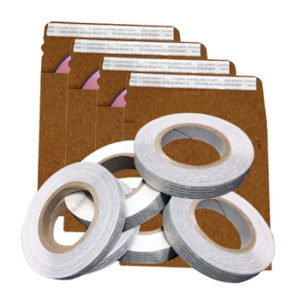
- Printing — Characters are printed on the check using MICR toner (for laser printers) or MICR ink (for inkjet printers). The toner contains iron oxide, which is magnetizable.
- Magnetization — When the check enters a bank’s processing equipment, the MICR line passes through a strong magnetic field that magnetizes the iron oxide particles.
- Reading — A magnetic read head detects the waveform pattern of each character. Every character in the MICR font produces a unique, identifiable waveform.
- Verification — The system verifies the signal strength meets ANSI standards and decodes the routing number, account number, and check number.
This process allows banks to read checks at speeds of over 100,000 documents per hour with near-perfect accuracy — even when checks are folded, stained, or stamped over.
What is the MICR Line on a Check?
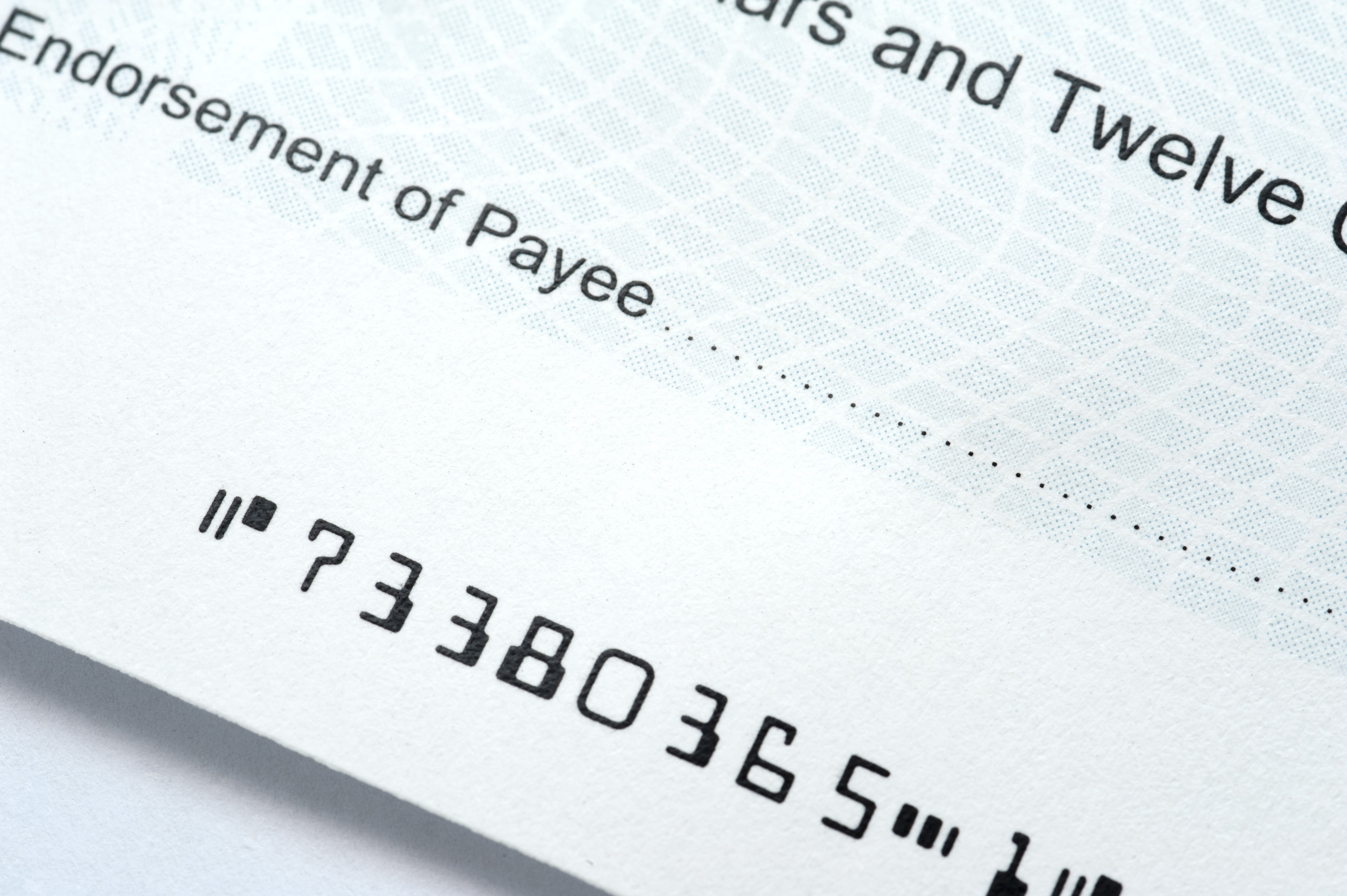
The MICR line is the string of numbers and symbols printed along the bottom of a check. It contains three critical pieces of information:
- Routing/Transit Number — Identifies the bank or financial institution (9 digits)
- Account Number — Identifies the account holder’s account
- Check Number — The serial number of the individual check
The MICR line is what allows automated check processing. Without it, every check would need to be read and entered manually — a process that would be impossibly slow and error-prone for the billions of checks still processed each year in the U.S. alone.
MICR Toner vs. Regular Toner: What’s the Difference?
This is one of the most common questions we receive at Tinta Industries. The difference is critical:
| Feature | MICR Toner | Regular Toner |
|---|---|---|
| Iron oxide content | Contains magnetizable iron oxide particles | No iron oxide — uses carbon black or other pigments |
| Signal strength | Produces readable magnetic signal (50-200% per ANSI) | Produces little to no magnetic signal |
| Bank acceptance | Accepted by all bank reader-sorter machines | Will be rejected — checks may bounce |
| Fraud protection | Tamper-resistant; alterations disrupt the magnetic pattern | No fraud protection at the MICR line |
| Compliance | Meets ANSI X9.27 and ABA standards | Does not meet any MICR compliance standard |
The bottom line: Printing checks with regular toner is a compliance violation. Banks will reject checks with insufficient MICR signal strength, resulting in returned items, fees, and potential loss of check-printing privileges.
Browse our MICR toner catalog →
E13B vs. CMC7: Which MICR Font Standard Do You Need?
There are two MICR font standards used worldwide:
E13B (Used in the U.S., Canada, UK, Australia, and most of Latin America)
- Contains 14 characters: digits 0-9 plus 4 special symbols
- Characters are designed with unique magnetic waveform signatures
- Required by the American Bankers Association (ABA) and the Federal Reserve
- This is the standard used in the United States and most of the Americas
CMC7 (Used in France, Brazil, and parts of Europe and South America)
- Contains 65 characters: digits 0-9, 26 uppercase letters, and special symbols
- Uses vertical bars with varying spacing to create magnetic patterns
- Dominant in French-speaking countries and the European banking system
- Brazil uses CMC7, making it relevant for cross-border Latin American operations
Which one do you need? If you print checks for U.S., Canadian, or most Latin American banks, you need E13B. If you serve Brazilian or European markets, you may need CMC7 — or both.
Is MICR Still Required in 2026?
Yes. Despite the growth of digital payments, MICR remains legally required for check processing in the United States.
- The Federal Reserve and ABA still mandate MICR encoding on all checks processed through the U.S. banking system
- Billions of checks are still written annually in the U.S. (approximately 11 billion in recent years)
- The Check 21 Act allows digital check images, but the original check must still have a valid MICR line
- Remote deposit capture (mobile check deposit) relies on MICR line data for accurate processing
- Corporate and government payments still heavily depend on checks — payroll, vendor payments, tax refunds, and benefits
MICR is not being phased out. If anything, the compliance requirements have gotten stricter as banks upgrade their reader-sorter equipment and fraud detection systems.
MICR Compliance Standards You Need to Know
If your organization prints checks, you must comply with these standards:
- ANSI X9.27 — The American National Standard for MICR printing quality. Defines acceptable signal strength levels (50% minimum, 200% maximum), character positioning, and print quality
- ABA (American Bankers Association) — Sets the rules for check formatting, routing number assignment, and MICR line layout
- Federal Reserve Regulation CC — Governs check availability and includes MICR requirements for check processing
- ANSI X9.100-160 — Specifies the check format and field placement standards
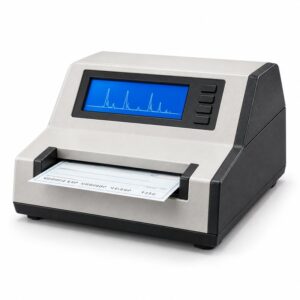
How to ensure compliance: Use certified MICR toner, verify signal strength with a MICR verifier, and regularly test your printed output. At Tinta Industries, we supply MICR verifiers that test signal strength to ANSI standards.

How MICR Prevents Check Fraud
Check fraud is on the rise. According to the Association for Financial Professionals (AFP), 63% of organizations experienced attempted or actual check fraud in recent years. MICR technology is a critical line of defense:
- Tamper detection — When someone attempts to wash or alter a check, the MICR line’s magnetic pattern is disrupted, triggering rejection by bank equipment
- Authentication — MICR signal strength verification confirms that checks were printed with legitimate MICR toner, not counterfeit materials
- Accuracy — Automated MICR reading eliminates human error in routing and account number entry, preventing misdirected payments
- Audit trail — MICR-encoded data provides a machine-readable record that supports fraud investigation and recovery
For maximum protection, pair MICR toner with security check stock (watermarks, microprinting, chemical-reactive paper) and regularly verify output with a MICR signal strength verifier.
Frequently Asked Questions About MICR
What does MICR stand for?
MICR stands for Magnetic Ink Character Recognition. It is the technology used to print and read the encoded characters on the bottom of checks and financial documents.
Can I print checks with regular toner?
No. Regular toner does not contain iron oxide and will not produce a readable magnetic signal. Checks printed with regular toner will be rejected by bank processing equipment, resulting in returned items and fees.
What is MICR toner made of?
MICR toner contains iron oxide (Fe₃O₄) particles mixed with resin and other components. The iron oxide is what makes the toner magnetizable and readable by bank equipment.
How do I know if my MICR toner is working correctly?
Use a MICR verifier to test the magnetic signal strength of your printed checks. Signal strength must fall between 50% and 200% per ANSI X9.27 standards. Tinta Industries supplies MICR verifiers for this purpose.
Is MICR ink the same as MICR toner?
No. MICR toner is used in laser printers; MICR ink is used in inkjet printers. Both contain iron oxide for magnetic readability, but they are formulated differently for their respective printer technologies.
What is the E13B font?
E13B is the MICR font standard used in the U.S., Canada, the UK, and most of Latin America. It consists of 14 characters (0-9 plus 4 special symbols) designed to produce unique magnetic waveforms when read by bank equipment.
Who invented MICR?
MICR technology was developed in the 1950s by the Stanford Research Institute and the American Bankers Association. It was officially adopted for use on U.S. checks in 1958 and has been the standard ever since.
Where can I buy MICR toner?
Tinta Industries has supplied MICR toner, ribbons, and verification equipment to banks and check printers, backed by over 20 years of founder experience. We carry cartridges for HP, Lexmark, and other major brands. Shop our MICR toner catalog →
Trust Tinta Industries for Your MICR Needs
With over 20 years of founder experience, Tinta Industries is the trusted MICR solutions partner for banks, check printers, and financial institutions across the United States, Panama, Ecuador, Colombia, Honduras, El Salvador, and the Dominican Republic.
We offer:
- MICR Toner Cartridges for HP, Lexmark, and more
- MICR & Encoder Ribbons (E13B indelible and fluorescent)
- MICR Verifiers for signal strength testing
- Check Scanners for digital processing and remote deposit
- Bilingual expert technical support in English and Spanish
Contact us today to get the right MICR solution for your operation.
📞 516-343-1533 | Contact Tinta Industries